The X-Men we all know and love didn’t start off quite like they ended up in more modern times. I’m a big fan of the X-Men, having grown up reading the comics, watching the old cartoon, and of course enjoying (most of) the movies. However, I only knew a little about the original X-Men comic series which was published in the 1960s. Finally, I read the first 31 issues and was surprised by some of the things Stan Lee, Jack Kirby, and others came up with early in Marvel’s mutant saga.
Like most comic books of the time, these early issues are full of purple prose, slapstick humor, on-the-nose dialog, and other questionable storytelling mechanics. As a writer, I found myself getting somewhat annoyed while reading the first five issues or so. For example, in one instance in the middle of what’s supposed to be a serious moment, Iceman complains that Angel’s wings are “tickling” him, eroding any sense of danger.
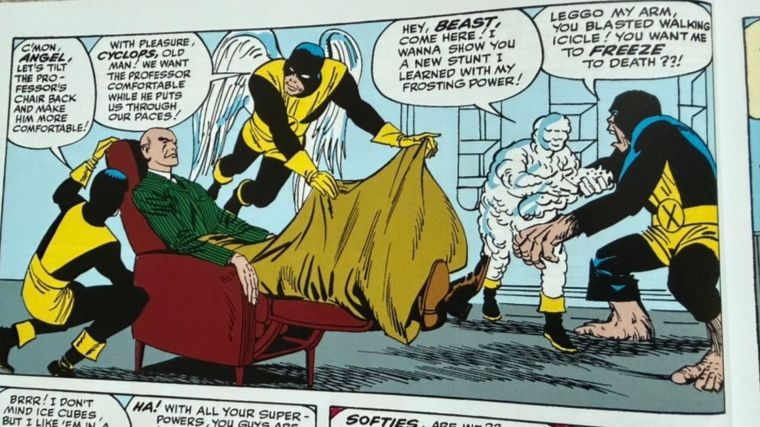
While I’ve seen plenty of people who go back and read old comics complain about the same things, as well as supposed anachronisms which really were just common things from the time, as I kept reading something changed for me.
I began to see the magic in the stories and the early seeds of the X-Men we’ve all grown to love. Even back then, it seems Marvel understood Magneto really is the greatest foe, even if they made him a somewhat corny villain.
Many other favorite characters are introduced in the first 31 issues. The original team features Professor X, Cyclops, Iceman, Angel, Beast, and Marvel Girl (who creates quite the stir when she joins). We see the introduction of Magneto, Toad, Mastermind, Quicksilver, Scarlet Witch, Blob, Juggernaut, Banshee, Dr. Bolivar Trask, and the Sentinels. Speaking of those mutant-catching sentient robots, they warranted a three-issue run for their debut, signaling that even back then the creative team understood the importance those creations would play in the universe.
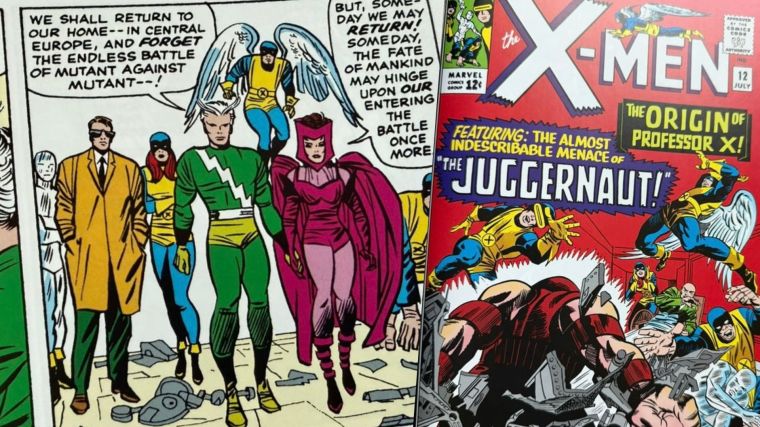
The X-Men also encounter the Savage Land for the first time. It’s a simpler place than what the team discovers in the 80s, but it lays the foundation for that further exploration later.
One of the most interesting events is the revealing of how Professor Xavier was paralyzed. So many believe it was Magneto who accidentally severed his friend’s spinal cord, which was true in the movies. But in the comics, it was an alien named Lucifer who dropped a huge stone block on the telepath, crushing his legs. It was to combat that extraterrestrial threat that Professor X originally formed the X-Men.
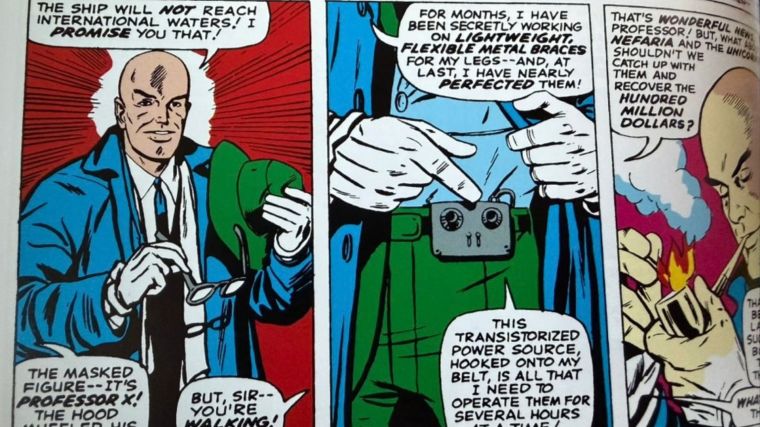
Later, the professor develops a device he calls “mechanical legs.” It allows him to walk, which sure is a nice convenience in some of the plotlines. Such a thing later doesn’t seem to exist in the comics, perhaps because it was a little too easy for the writers to lean on.
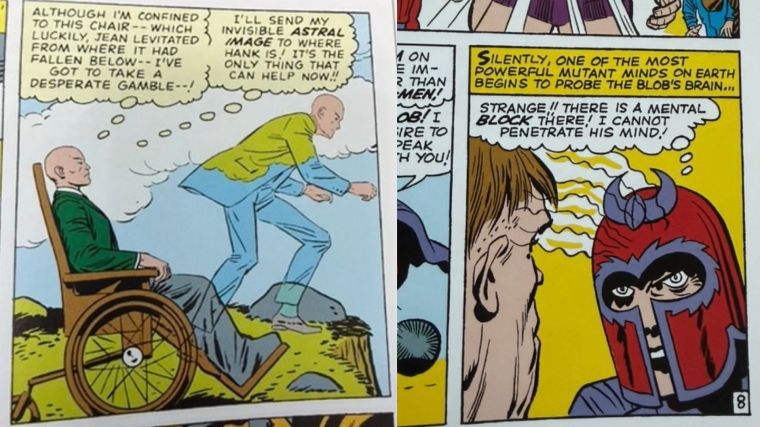
While everyone knows Professor X can communicate with others via his mind, rewrite memories, and use Cerebro to find other mutants, the early editions of the X-Men play up his ability to travel through the astral plane quite a bit. That’s something which mostly isn’t used in later comics, but it’s a key plot device in the original X-Men run.
Even more surprising is that Magneto has powers he calls “magnetic attraction,” allowing him to control others mentally. He basically hypnotizes people, forcing them to do his will, something I never have seen him do in more modern comics.
When the Blob is introduced, he isn’t like how we know him now. He’s a carnie who draws in big crowds for his freakish size and ability to stop cannonballs, among other things. He’s also so conceited he refuses not only to join Magneto but also the X-Men – yes, they originally tried recruiting him as a superhero. But the Blob thought himself superior to everyone and so wanted to do his own thing as a carnie and later as a professional wrestler.
Banshee started off as a villain but was being mind controlled by a mysterious group called Factor Three. That he wasn’t a superhero from the beginning was a big surprise.
One of the strangest members of the X-Men was a guy named Mimic. Able to mimic the powers of anyone nearby, he originally appeared as a villain. Later, he decides to use his powers for good, joining the X-Men, which was a good thing since he could defeat them all. But he wasn’t a mutant, getting his powers from a chemical experiment gone wrong.
That’s another interesting thing about the early X-Men comics: it seems Stan Lee and company didn’t entirely get what a mutant was nor the potential of what they had created. That seemed to evolve over time, making the original series feel a little directionless at times. I can’t tell you how many issues involve the different members of the team going on vacation only for their fun time to be cut short by some unforeseen threat.
Still, there’s a certain charm and innocence to the original X-Men comic book series. You won’t encounter even a hint of cynicism while also basking in quite a bit of optimism, even if that’s washed down with silliness. I grew to respect and enjoy that tone.
I’m working my way through the rest of the original X-Men comics, with the plan of progressing through Uncanny X-Men issue by issue, understanding the characters I love better than ever before.
Want to support my work? Send me a tip here or through Cash App (username $StevenSymes).
Follow me on Facebook, X, and Instagram.
Images via Marvel Comics


